
Adult acne treatment in Sheffield: Why it’s still happening and why teenage advice wont fix it
If you’re dealing with breakouts in your thirties, forties, or beyond, you’ve probably already heard some version of “you’ll grow out of it.” For a growing number of adults, that simply isn’t true. Adult acne is one of the most common reasons Sheffield clients come to us for a proper skin assessment, and it rarely responds to the products, routines, or advice designed for teenage skin, because, physiologically, it isn’t the same condition wearing a different age.
Adult Acne Is More Common Than You’ve Been Led to Believe
Acne is often framed as a rite of passage that resolves by your early twenties. In reality, a significant proportion of adults — women in particular — experience acne well into their thirties and forties, and for some, it appears for the very first time long after adolescence has passed. If you’re managing breakouts as an adult, you haven’t done anything wrong, and you’re certainly not alone. What’s needed isn’t more willpower with your skincare routine — it’s a proper understanding of what’s actually driving it.
Why Adult Acne Looks and Behaves Differently
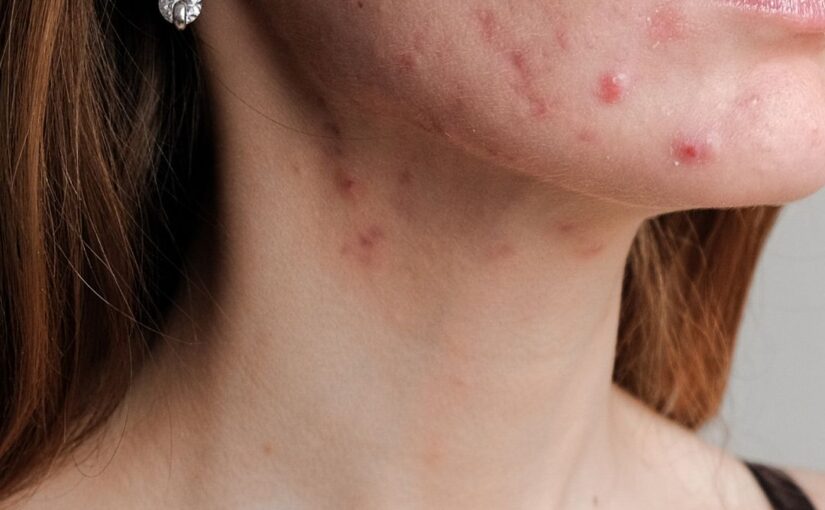
Teenage acne tends to spread across the forehead, nose, and cheeks, and is closely tied to the surge in oil production that comes with puberty. Adult acne presents differently. It’s frequently concentrated along the jawline, chin, and lower face, often appears as deeper, more tender, inflamed lesions rather than surface-level congestion, and tends to flare in a cyclical pattern rather than staying constant. This pattern is a clue in itself — it points toward a hormonal driver, which is the case in the majority of adult acne we see.
The Hormonal Root Most People Are Never Told About
Androgens — a group of hormones present in everyone, regardless of sex — stimulate the sebaceous glands to produce more oil. When androgen activity rises or fluctuates, whether from the natural rhythm of the menstrual cycle, conditions such as polycystic ovary syndrome (PCOS), or the hormonal shifts of perimenopause, the sebaceous glands respond by producing excess sebum. Combined with the skin’s normal cell turnover, this creates the blocked, inflamed follicles that show up as adult acne.
Stress adds a second layer to this picture. Chronic stress raises cortisol, and elevated cortisol both increases oil production and heightens inflammation in the skin, which is why breakouts so often intensify during genuinely stressful periods, even when nothing else in your routine has changed. Understanding which of these factors, or combination of factors, is driving your skin is what separates a treatment plan that works from one that’s guesswork.
Why Standard Acne Advice Often Makes Adult Skin Worse
This is where most adults with acne go wrong — not through neglect, but through applying the wrong solution. Teenage acne products are typically formulated to control excess oil in skin that’s naturally more resilient and less prone to sensitivity. Adult skin is different: it’s thinner, produces less collagen, and has a more fragile barrier than it did a decade or two earlier. Treating it with the same harsh, drying, high-strength products designed for a nineteen-year-old’s skin frequently backfires, stripping and irritating the barrier, which in turn triggers more inflammation and more breakouts. The result is a frustrating cycle where the skin gets more reactive and more congested at the same time, and the products meant to help end up being part of the problem.
Adult Acne Treatment at re/skin clinic in Sheffield: Why It’s a Specialism, Not a Standard Protocol
Adult acne is one of the concerns we work with most closely at our Sheffield clinic, precisely because it demands a different approach to the generic advice most adults have already tried and been let down by. Every case begins with a thorough consultation, where we look at your hormonal history, your current skincare routine, your stress patterns, and your skin’s barrier health — because the right treatment depends entirely on understanding what’s actually driving your breakouts, not just treating what’s visible on the surface.
Our approach is always progressive. We prioritise calming inflammation and rebuilding barrier function first, since adult skin rarely tolerates aggressive treatment well until it’s stable. From there, we build a bespoke plan that combines in-clinic treatments with homecare designed to work with your skin rather than strip it further. Depending on what your consultation reveals, this might include Byonik Pulsed Triggered Laser to calm inflammation and repair the barrier, IPL to target the bacteria and residual redness associated with inflammatory breakouts, microneedling to address any post-acne scarring or textural changes, exosomes to support cellular recovery, and bespoke facials tailored specifically to congested, adult skin. No two adult acne plans look the same, because no two cases share exactly the same underlying cause — which is exactly why clients travel to see us from across Sheffield and the surrounding area for an assessment that actually gets to the root of it.
Frequently Asked Questions
Why am I only getting acne now, in my thirties or forties, when I never had it as a teenager?
Adult-onset acne is usually driven by hormonal changes rather than the surface-level oiliness typical of teenage skin. Shifts in androgen activity — whether from natural cycle fluctuations, PCOS, perimenopause, or sustained stress — can trigger acne for the first time, even in people who had entirely clear skin throughout adolescence.
Is my adult acne caused by stress?
Stress can be a significant contributing factor. Elevated cortisol increases both oil production and inflammation in the skin, which is why breakouts often flare noticeably during periods of high stress. It’s rarely the only factor at play, but it’s an important one to identify and manage as part of a full treatment plan.
Can perimenopause cause acne?
Yes. The hormonal fluctuations that occur during perimenopause — particularly shifts in the balance between oestrogen and androgens — can trigger new breakouts or worsen existing acne, even in skin that has been clear for decades. This is a common and often overlooked cause of adult acne.
Do I need different treatment to what I used as a teenager?
In most cases, yes. Adult skin is thinner, more barrier-sensitive, and slower to recover than teenage skin, so the harsher, oil-stripping approach typically marketed for teenage acne is often counterproductive. Adult acne generally responds better to a barrier-first, progressive treatment plan built around your specific hormonal and skin profile.
Where can I get adult acne treatment in Sheffield?
We offer specialist adult acne assessments and treatment plans at our Sheffield clinic, combining in-depth consultation with evidence-based in-clinic treatments and tailored homecare. If you’ve struggled to find an approach in Sheffield that actually addresses the root cause of your breakouts, a consultation is the best place to start.
Ready to Understand What’s Actually Driving Your Adult Acne?
If you’re tired of trying products that were never designed for your skin, an honest, thorough assessment is the place to start. Based in Sheffield, we’re happy to talk you through what’s really going on and what a treatment plan built for your skin — not a teenager’s — actually looks like. Book your consultation here to finally understand your skin and what it needs to manage adult acne.
