
Oily skin is one of the most commonly mismanaged skin types — not because it is inherently complicated, but because the instinct to strip and dry out oily skin almost always makes the problem worse.
If you have oily skin, you will know the persistent shine, the enlarged-looking pores, the tendency towards congestion and breakouts, and the frustration of never quite feeling "clean." The key to genuinely improving oily skin lies not in fighting it, but in understanding it.
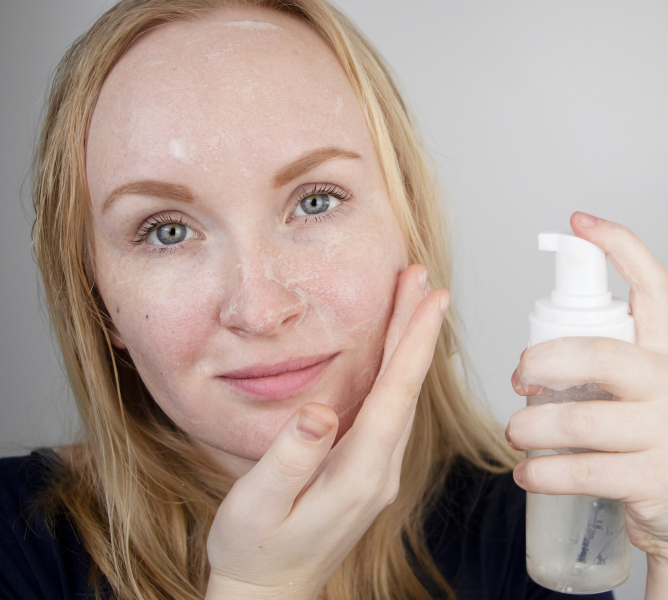
Understanding Oily Skin
Oily skin is characterised by an overproduction of sebum — the skin's natural oil from the sebaceous glands. This results in a persistently shiny or greasy appearance, enlarged-looking pores (which are in reality stretched by the volume of sebum passing through them), and a tendency towards congestion, blackheads, and inflammatory breakouts. Oiliness is largely determined by genetics and hormonal activity, but it can be significantly influenced by external factors including climate, stress, diet, and crucially the skincare products and routines being used.
One of the most important things to understand about oily skin is that sebum is not the enemy. It plays a vital role in maintaining the skin's barrier function and protecting it from environmental stressors. The issue is not the presence of sebum, but the imbalance in its production. When the skin produces more sebum than it needs, pores become congested, the environment within the follicle becomes hospitable to acne-causing bacteria, and the skin loses its ability to look clear and refined.
Over-treating oily skin through harsh cleansers, excessive exfoliation, or products that strip the skin of its natural oils typically triggers a counterproductive compensatory response. The skin senses that its protective barrier has been depleted and responds by producing even more oil. This is why a balanced, considered approach is so much more effective than an aggressive one. The goal is to bring the skin back into balance and support healthy sebaceous regulation over time.
Our Approach to Oily Skin
We begin with a comprehensive consultation to assess the contributing factors behind your skin's oiliness, whether hormonal, environmental, routine-related, or a combination. We review your current skincare products, your lifestyle, and your skin history before recommending any treatment pathway.
Our approach is focused on genuine, long-term balance rather than surface-level control. This means identifying and addressing what is driving excess sebum production, supporting the skin's barrier so it no longer needs to overcompensate, and introducing treatments that regulate sebaceous activity without stripping or destabilising the skin.
We also give careful attention to homecare. For many of our clients with oily skin, switching to appropriately formulated products, and removing those that are contributing to the problem, creates a significant and immediate improvement before any in-clinic treatment has even begun.
Common Questions About Oily Skin
Can oily skin also be dehydrated?
Yes — and this is very common. Oily skin that has been over-treated or stripped of its natural oils often produces even more sebum in compensation, while simultaneously being dehydrated at a cellular level. The result is a skin that feels oily to the touch but tight and uncomfortable underneath. Addressing dehydration as part of managing oily skin is an important and often overlooked part of treatment.
Should I skip moisturiser if I have oily skin?
No — and this is one of the most common and damaging mistakes made by people with oily skin. Skipping moisturiser signals to the skin that its barrier is under-protected, prompting it to produce more oil to compensate. A lightweight, non-comedogenic moisturiser appropriate for your skin type is important for maintaining balance, supporting barrier function, and preventing the over-production of sebum.
Will my skin become less oily over time?
In many cases, yes. Sebum production naturally decreases with age, and with the right consistent treatment and homecare approach, it can also be significantly regulated much sooner. Many of our clients with oily skin see meaningful improvements in shine, pore appearance, and skin clarity over the course of a treatment programme.
Are there ingredients I should look for or avoid?
Ingredients such as niacinamide, salicylic acid (in appropriate concentrations and formulations), and zinc can be genuinely helpful for regulating oily skin. However, the wrong product or formulation, even one marketed for oily skin, can be irritating or counterproductive. We will guide you towards products that are genuinely suitable for your skin as part of your personalised treatment plan
Your Next Steps
If oily skin has been a source of frustration, the right approach can make a significant difference, not just to how your skin looks, but to how it feels and behaves every day. We would love to help you understand your skin better and build a plan that works with it, not against it.